The drugs young people encounter today are changing rapidly, creating new risks for college students, families, and communities. Recent incidents at Cornell University and the University of Mississippi have raised concerns about increasingly potent synthetic opioids, ketamine, kratom products, and other dangerous substances.
A Drug Supply Full of Unknowns
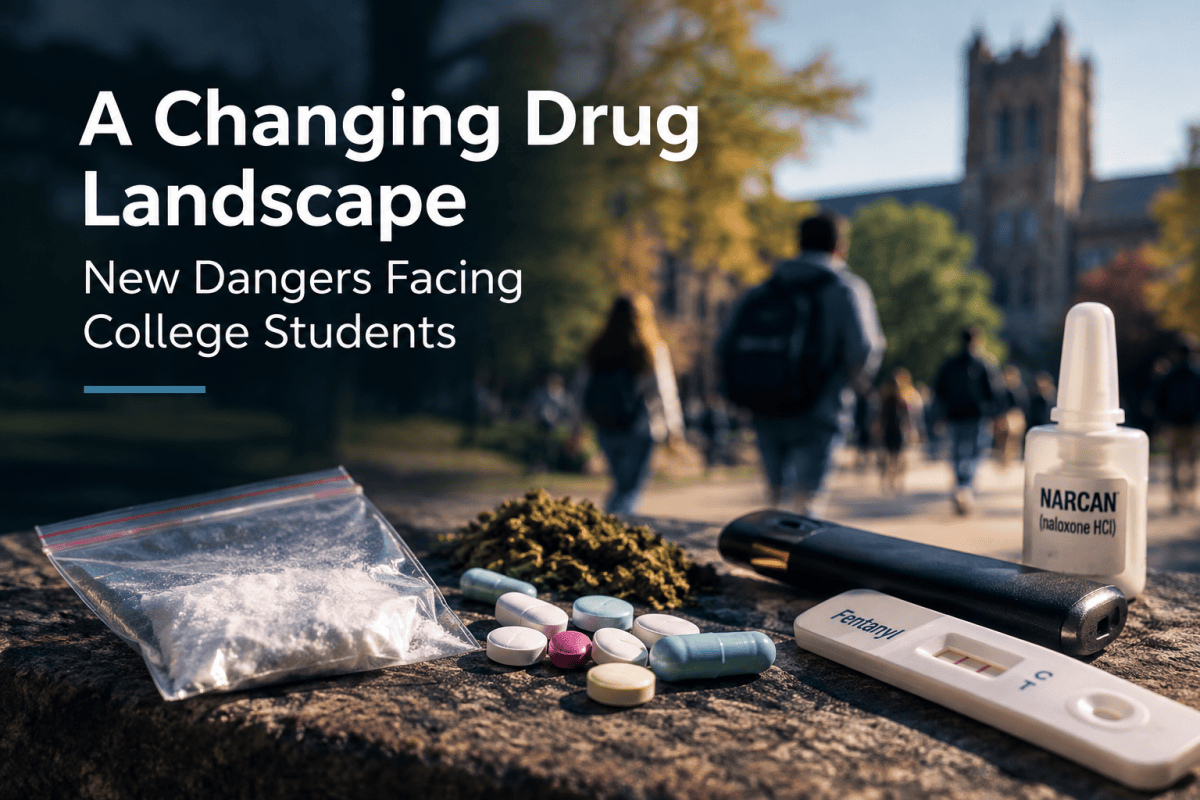
Fentanyl remains a major concern, but it is not the only dangerous substance circulating in the illicit drug supply. Emerging synthetic opioids, including cychlorphine, and substances such as xylazine can make drug use even more unpredictable.
Some products marketed as herbal alternatives, including concentrated or chemically altered kratom products, may contain dangerous synthetic compounds. People may have no idea what they are actually consuming.
Drug-testing strips can help identify certain substances, but they have limitations. A test designed to detect fentanyl, for example, will not detect every dangerous synthetic opioid. No test can guarantee that a drug is safe.
Awareness and Preparedness Can Save Lives
Universities are responding by expanding access to naloxone, commonly known as Narcan, and offering overdose-response training and substance-use education. These resources can make a critical difference when an emergency occurs.
Naloxone can reverse opioid overdoses, but it does not reverse every type of drug toxicity. Anyone who suspects an overdose should call emergency services immediately.
Parents, educators, and students also have an important role to play. Open conversations about emerging drugs, the limitations of testing, and recognizing medical emergencies can help young people make more informed decisions.
Prevention Starts With Education
Today’s drug landscape requires more than outdated warnings. Young people need accurate, current information about the substances they may encounter and the potentially devastating consequences of experimenting with unknown drugs.
At The Zach Project, we believe awareness, education, and honest conversations about substance use are essential. Behind every overdose is a human life and a network of family members and friends who may face lasting grief.
By sharing knowledge, expanding access to lifesaving resources, and keeping these conversations going, we can help protect our communities and prevent more families from experiencing the devastating impact of substance-related loss.
Learn more about The Zach Project’s substance-use awareness and education efforts at voicesfromtheopioidcrisis.com/resources.
Source: Adapted from Susan Svrluga, “How ketamine, kratom and other drugs are changing Cornell and other schools,” The Washington Post, October 4, 2026.