
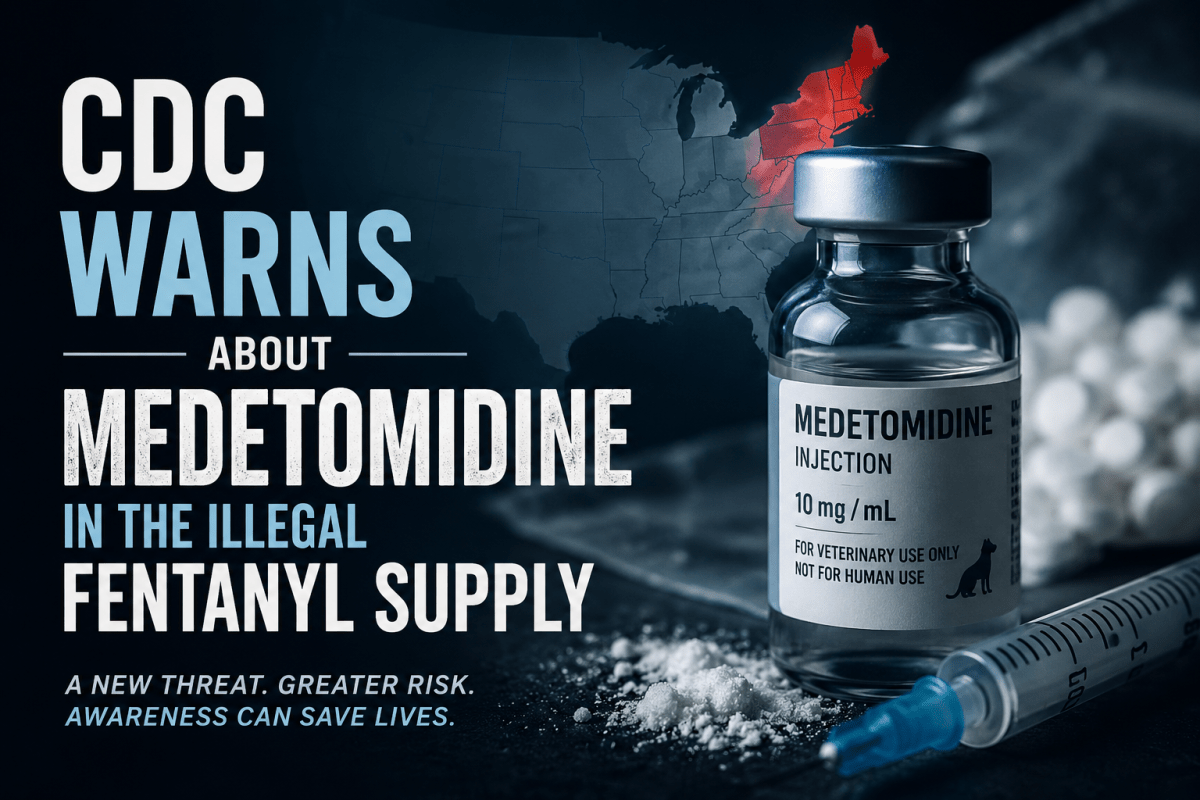
A new warning from the Centers for Disease Control and Prevention highlights another dangerous development in the opioid crisis: the increasing presence of medetomidine in the illegal fentanyl supply across the United States.
Medetomidine is a veterinary sedative that is not approved for human use. It is commonly used in dogs for sedation and pain management, but it is now being detected in street drugs—particularly fentanyl mixtures—throughout the Northeast and other parts of the country.
According to the CDC, medetomidine can cause:
- Extreme sedation
- Slowed heart rate
- Dangerous drops in blood pressure
Even more concerning is the severe withdrawal syndrome associated with the drug. Symptoms can include:
- High blood pressure
- Anxiety
- Nausea and vomiting
- Medical complications requiring emergency care
Because fentanyl is often involved in these overdoses, naloxone can still help restore breathing during an opioid overdose. However, medical professionals are being warned that some patients may not fully respond to opioid reversal medications alone due to the effects of medetomidine.
Recent testing has shown the substance appearing in:
- Law enforcement drug seizures
- Wastewater surveillance testing
- Street opioid samples
A report from New York City found that approximately 25% of tested opioid samples between May 2024 and December 2025 contained medetomidine.
Researchers also noted that these samples lacked the preservatives typically found in medical or veterinary formulations, suggesting the drug is being produced in illegal laboratories rather than diverted from veterinary medicine.
This warning is another reminder that today’s illicit drug supply is increasingly unpredictable and dangerous. Many individuals struggling with substance use disorder may have no idea what substances are actually present in the drugs they are using.
Families, educators, healthcare professionals, and communities must continue to prioritize:
- Education
- Awareness
- Compassionate conversations
- Access to treatment and recovery resources
Substance use disorder is a medical condition—not a moral failing. As synthetic drug combinations become more complex and deadly, awareness can save lives.
The CDC is urging clinicians and public health officials to closely monitor local drug trends and consider medetomidine exposure in suspected overdose cases.
Original reporting appeared in JAMA on April 24, 2026, in an article by Samantha Anderer.
Reach out to us if you’d like to schedule a visit to your school or community at large. We’d be glad to bring the conversation to you.