
I recently read an article published in JAMA by Samantha Anderer.
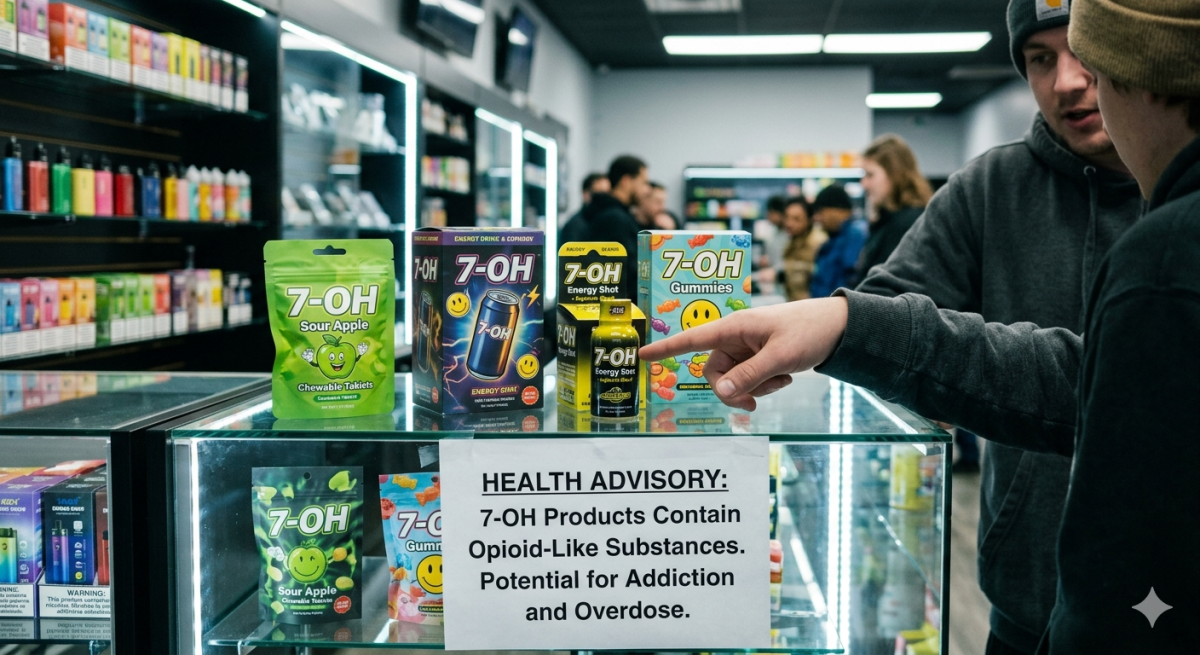
Health officials are sounding the alarm on 7-hydroxymitragynine (7-OH), a highly concentrated kratom derivative frequently sold in vape shops, gas stations, and online. Although naturally occurring in kratom leaves in trace amounts, new products utilize synthetic processes to boost 7-OH concentrations, creating effects comparable to morphine. Available as fruit-flavored gummies, tablets, and shots, these products are legally accessible and specifically marketed in ways that may appeal to youth.
The FDA and HHS recently recommended that 7-OH be restricted under the Controlled Substances Act, citing its potent activity as a μ-opioid agonist. While users often seek the substance for pain relief, euphoria, or as a “legal high,” experts warn of its high potential for addiction and respiratory depression. Data from America’s Poison Centers shows a sharp increase in 7-OH exposures, with symptoms ranging from agitation and rapid heart rate to seizures and loss of consciousness.
Because the production of 7-OH currently occurs in unregulated labs, dosages are inconsistent and safety standards are nonexistent. Some users transition to 7-OH after developing a tolerance to standard kratom, often unaware of the significantly higher potency. As the DEA reviews the recommendation for scheduling, officials urge healthcare professionals and consumers to remain vigilant regarding the risks of dependence and overdose associated with this emerging opioid-like substance.
Sign up for JAMA to read the full article here.